Thanks For The Visit !

Farmboyzim's Freeware Finds
The Sopwith Camel
Review by Farmboyzim
The Sopwith Camel
Review by Farmboyzim
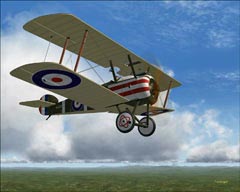
Here's yet another gem of a Freeware Find...The Sopwith Camel. This model is a MSFS 2004 version only, and includes a virtual cockpit, rotary type engine, smoking engine and 3 texture choices.
The model is by David Eckert, FDE by Jerry Beckwith, with additional textures by John Terrell. Panel, gauges and sound by Microsoft. The file name is camel04.zip.
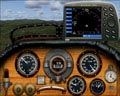
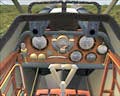
Biplane fans beware! This model could prove addicting! This model is so detailed, I am once again amazed that these fantastic aircraft are offered as freeware! The exterior of the plane is fantastically detailed, as well as the interior, which features a beautifully rendered 2D cockpit, and a virtual cockpit that is quite easy to operate from. You can almost hear the wicker seat creak and stretch as you virtually take your seat in the cockpit. The only modern avionics in this aircraft is a GPS, and that's a whole lot more than the pilots who originally flew this bird had! It all comes together for a well made, fun to fly model!
The model is by David Eckert, FDE by Jerry Beckwith, with additional textures by John Terrell. Panel, gauges and sound by Microsoft. The file name is camel04.zip.
Biplane fans beware! This model could prove addicting! This model is so detailed, I am once again amazed that these fantastic aircraft are offered as freeware! The exterior of the plane is fantastically detailed, as well as the interior, which features a beautifully rendered 2D cockpit, and a virtual cockpit that is quite easy to operate from. You can almost hear the wicker seat creak and stretch as you virtually take your seat in the cockpit. The only modern avionics in this aircraft is a GPS, and that's a whole lot more than the pilots who originally flew this bird had! It all comes together for a well made, fun to fly model!


www.farmboyzimsflightsims.com
FBZFS

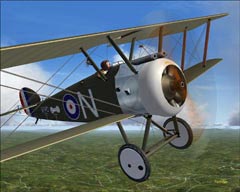
The Flight Dynamics of the model represent a very maneuverable and quick aircraft...for a biplane, that is! The putt-putt-putt sounds of the old radial engine adds considerable "atmosphere" to your ride.
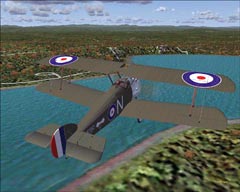
Three liveries are included in the file; No. 139 Squadron RAF, which had been flown by Maj. W.G. Barker, the Old Rhinebeck Aerodrome Edition, and the USAF Museums 17th Aero Squadron livery. All the paint jobs are absolutely fantastic!
While the aircraft was in level flight, it was noticeably tail-heavy. I know I just said all the weight was forward, but while cruising along in low-level flight, the pilot had to keep constant forward pressure on the stick to keep her from climbing. This was because the aircrarft lacked what is called a "variable incidence" tailplane, which was a compensating factor. At higher altitudes, trimming the machine out is possible for an almost hands-off cruise. I said "almost"!
Compared with what is written about the Camel's flight characteristics and what this model does with all the realism sliders maxed, I'd say job well done. take-off's certainly required a liberal use of rudder, and if there's a cross wind...well, let's just
Three liveries are included in the file; No. 139 Squadron RAF, which had been flown by Maj. W.G. Barker, the Old Rhinebeck Aerodrome Edition, and the USAF Museums 17th Aero Squadron livery. All the paint jobs are absolutely fantastic!
While the aircraft was in level flight, it was noticeably tail-heavy. I know I just said all the weight was forward, but while cruising along in low-level flight, the pilot had to keep constant forward pressure on the stick to keep her from climbing. This was because the aircrarft lacked what is called a "variable incidence" tailplane, which was a compensating factor. At higher altitudes, trimming the machine out is possible for an almost hands-off cruise. I said "almost"!
Compared with what is written about the Camel's flight characteristics and what this model does with all the realism sliders maxed, I'd say job well done. take-off's certainly required a liberal use of rudder, and if there's a cross wind...well, let's just


say you should turn your crashes off in the options for the time being! Once you get the hang of it, which happens fairly quickly, you'll see that it is far more entertaining to fly this modelled "realistically", than it is with the options turned down. One other quick note about "realism", and it concerns the type of engines that are used in these aircraft. While performing either a loop or a barrel role, you'll find that the engine does its share of sputtering. This is due to the gravity fed fuel system. The engine just can't get enough juice while hanging her upside down! All in all, this is a highly detailed and very fun aircraft to fly, and it is great for those site seeing trips where speed is not the most important factor.
The Camel was developed as a replacement for the Sopwith Pup, and it first flew in December of 1916. The aircraft was armed with two .303 British 7.7 mm Vickers machine guns mounted in the cowl, firing forward through the propeller disc. The name "Camel" hails from the fairing that surrounds the guns, creating a hump in appearance.
Students learning on the earlier Camel's, which were powered by a Clerget engine, considered the machine to be hard to handle, owing to the fact that the entire kit and kaboodle (technical term), which included the pilot, guns, fuel tank, and engine were located all within the first seven feet of the aircraft. Talk about nose heavy! Add to that the Clerget engine was touchy when it came to fuel mixture settings, causing the engine to choke out and quit on take-off's.
The Camel entered service in June of 1917 with No. 4 Squadron of the Royal Naval Air Service, near Dunkirk. By February of 1918, 13 Squadrons in all were equipped with the Camel. Roughly 5,500 were manufactured.
In combat, the Sopwith Camel proved to be the nemisis of the German Albatros aircraft. The Camel was credited with shooting down 1,294 enemy aircraft, more than any other Allied scout.
Students learning on the earlier Camel's, which were powered by a Clerget engine, considered the machine to be hard to handle, owing to the fact that the entire kit and kaboodle (technical term), which included the pilot, guns, fuel tank, and engine were located all within the first seven feet of the aircraft. Talk about nose heavy! Add to that the Clerget engine was touchy when it came to fuel mixture settings, causing the engine to choke out and quit on take-off's.
The Camel entered service in June of 1917 with No. 4 Squadron of the Royal Naval Air Service, near Dunkirk. By February of 1918, 13 Squadrons in all were equipped with the Camel. Roughly 5,500 were manufactured.
In combat, the Sopwith Camel proved to be the nemisis of the German Albatros aircraft. The Camel was credited with shooting down 1,294 enemy aircraft, more than any other Allied scout.
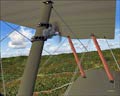


Replica of Camel F.I flown by
Lt. George A. Vaughn Jr.,
17th Aero Squadron
Lt. George A. Vaughn Jr.,
17th Aero Squadron

As 1918 rolled around, the Camel was starting to become obsolete, having poor performance over 12,000 feet. The aircraft was used to fill a different role than that of aerial fighter at this point. Ground attack was the order of the day, and it was used to strafe and drop 250 pound bombs on the enemy. Considerable losses were taken in this role. The Camel remained in service for the rest of the war, as the Sopwith Snipe was still under development. One other role that the Camel was used in was that of a "Parasite" fighter. The airship R23 was used to launch the Camel for missions. I am reminded of the U.S.S. Macon of later years, which was another Airship that could launch and recover aircraft.
There are just seven authentic Sopwith Camels in existance today, worldwide.
There are just seven authentic Sopwith Camels in existance today, worldwide.
Aircraft Specifications
·Crew: 1
·Length: 18 ft 9 in (5.71 m)
·Wingspan : 26 ft 11 in (8.53 m)
·Height: 8 ft 6 in (2.59 m)
·Wing area: 231 ft² (21.46 m²)
·Empty weight: 930 lb (420 kg)
·Loaded weight: 1,455 lb (660 kg)
·Powerplant: 1× Clerget 9B 9-cylinder Rotary engine , 130 hp
Performance
·Maximum speed: 115 mph (185 km/h)
·Stall speed: 48 mph (77 km/h)
·Range: 300 mi ferry (485 km)
·Service ceiling: 21,000 ft (6,400 m)
·Rate of climb: 1,085 ft/min (5.5 m/s)
Armament
·Guns: 2× 0.303 in (7.7 mm) Vickers machine guns
·Crew: 1
·Length: 18 ft 9 in (5.71 m)
·Wingspan : 26 ft 11 in (8.53 m)
·Height: 8 ft 6 in (2.59 m)
·Wing area: 231 ft² (21.46 m²)
·Empty weight: 930 lb (420 kg)
·Loaded weight: 1,455 lb (660 kg)
·Powerplant: 1× Clerget 9B 9-cylinder Rotary engine , 130 hp
Performance
·Maximum speed: 115 mph (185 km/h)
·Stall speed: 48 mph (77 km/h)
·Range: 300 mi ferry (485 km)
·Service ceiling: 21,000 ft (6,400 m)
·Rate of climb: 1,085 ft/min (5.5 m/s)
Armament
·Guns: 2× 0.303 in (7.7 mm) Vickers machine guns

While looking over the information on the Camel that's out there, I came across a saying about the Camel. The Sopwith Camel offered a choice between a "wooden cross, red cross or a Victoria Cross." The only cross you are going to get is "cross-eyed" from the amount of time you may spend in this model! Great job on this model gang, and thanks for putting it out there FOR FREE!!!
Albatross DIII (OAW) Collection: Model by Stuart Green
Click Picture to Download
Click Picture to Download