
Thanks For The Visit !
Farmboyzim's Freeware Finds
Boeing Tri-MotorModel 80A
Review by Farmboyzim
Boeing Tri-MotorModel 80A
Review by Farmboyzim
I couldn't believe my eyes when I came upon this beauty of a Freeware jewel! Chuck Jodry and the VJPL Flight Lab have put together an awesome rendition of Boeings first ever, commercial passenger aircraft. If you are a lover of vintage aircraft, you're going to love this one!
Boeing had the Chicago to San Francisco route of the Contract Air Mail system, flying under the colors of Boeing Air Transport, later to become United Airlines. The route operations began back in 1927 with the Boeing Model 40. Even though the Model 40 could accommodate two passengers, this was not the primary role of this aircraft. The Model 80 was developed out of an increased demand for passenger service. One of the many first's for this aircraft was the ability to seat three abreast in the separate cabin. The separation of the passengers from the pilots, who operated the aircraft from one of the original "front offices", was another first in passenger transport. The passenger cabin offered luxuries such as padded seats and lighting. It even had a rest room with hot and cold running water! While the aircraft had a service ceiling of 14,000 feet, the passengers rode in even more comfort within a heated cabin. No need to shave the sheep for more wool!
Boeing had the Chicago to San Francisco route of the Contract Air Mail system, flying under the colors of Boeing Air Transport, later to become United Airlines. The route operations began back in 1927 with the Boeing Model 40. Even though the Model 40 could accommodate two passengers, this was not the primary role of this aircraft. The Model 80 was developed out of an increased demand for passenger service. One of the many first's for this aircraft was the ability to seat three abreast in the separate cabin. The separation of the passengers from the pilots, who operated the aircraft from one of the original "front offices", was another first in passenger transport. The passenger cabin offered luxuries such as padded seats and lighting. It even had a rest room with hot and cold running water! While the aircraft had a service ceiling of 14,000 feet, the passengers rode in even more comfort within a heated cabin. No need to shave the sheep for more wool!


www.farmboyzimsflightsims.com
FBZFS

The Model 80 was first flown in August of 1928. It was a large, un-equal span biplane, having a lower wing of reduced chord. The wings were constructed out of fabric covered wood, with the fuselage and tail being made out of welded steel tubing, which was also fabric covered. Landing gear was fixed, and she was a tail-dragger. Because the Model 80 was a bi-plane, it served well in having the ability to land at slow speeds at the high altitude airports which were along the Chicago to San Francisco route.
The aircraft was powered with three Pratt and Whitney Wasp Radial engines, churning out a whopping 525 hp each. These were mounted in the typical fashion for Tri-planes, an engine on the nose, and one each mounted between the wings. It had a wing span of 80 feet, and some models were rigged to have removable wingtips so that the aircraft could be tucked in under cover at some of the airfields with small hangers along the route. She weighed in at 17,500 pounds and had a top speed of 138 miles per hour. Cruising speed was around 125 miles per hour. The Model 80A could accommodate up to 18 passengers, and transport them and 898 pounds of cargo for legs up to 460 miles in length.
The aircraft was powered with three Pratt and Whitney Wasp Radial engines, churning out a whopping 525 hp each. These were mounted in the typical fashion for Tri-planes, an engine on the nose, and one each mounted between the wings. It had a wing span of 80 feet, and some models were rigged to have removable wingtips so that the aircraft could be tucked in under cover at some of the airfields with small hangers along the route. She weighed in at 17,500 pounds and had a top speed of 138 miles per hour. Cruising speed was around 125 miles per hour. The Model 80A could accommodate up to 18 passengers, and transport them and 898 pounds of cargo for legs up to 460 miles in length.

The Model 80 was the first aircraft used by United Airlines. Boeing Air Transport acquired Pacific Air Transport, National Air Transport, and finally Varney Air Lines and all of them ended up flying the colors of United Airlines, hence the name. Up until the mid 1920's, aircraft had been developed for transport of cargo and goods, not people. Boeing's Model 80, along with the Ford and Fokker Tri Motors were breaking new ground in the passenger transport business.
I had stated that the Model 80 was an aircraft that started some new trends in aviation transportation service. Stewardesses were incorporated for the first time, to help with the passengers during the flight. In 1930, Miss Ellen Church, who happened to not only, be a registered nurse, but also a student pilot, convinced the management at Boeing to hire female flight attendants. Up until then, the duties of passing out meals, serving coffee, and tending to other needs of the passengers were left up to the copilot. Miss Church's convincing argument was that the sight of female attendants on board the Model 80's would help to alleviate some of the fears that folks had of flying at the time. Taking to the air was still relatively in its infancy, so I can empathize with the concern that some would have in flying half-way across the country! The idea was put to a trial test and proved to be extremely popular, and so began another chapter in the history of Commercial Passenger Aviation.
I had stated that the Model 80 was an aircraft that started some new trends in aviation transportation service. Stewardesses were incorporated for the first time, to help with the passengers during the flight. In 1930, Miss Ellen Church, who happened to not only, be a registered nurse, but also a student pilot, convinced the management at Boeing to hire female flight attendants. Up until then, the duties of passing out meals, serving coffee, and tending to other needs of the passengers were left up to the copilot. Miss Church's convincing argument was that the sight of female attendants on board the Model 80's would help to alleviate some of the fears that folks had of flying at the time. Taking to the air was still relatively in its infancy, so I can empathize with the concern that some would have in flying half-way across the country! The idea was put to a trial test and proved to be extremely popular, and so began another chapter in the history of Commercial Passenger Aviation.
The September 25, 1928, edition of The New York Times announced the advent of the Model 80s with the headline "More Big Planes for Trips West" and called the planes “... as luxurious and comfortable as any transport planes yet built." Indeed, they were impressive, and I suppose for the time, the passenger comfort level must have seemed like it couldn't get any better! There was no mention as to the serving of cocktails and champagne in the history of the 80. Patience!
Model 80's continued to serve United Airlines into 1934, when they and other airliners were made obsolete by the introduction of the revolutionary Boeing Model 247 all-metal, twin-engine, monoplane transport. Surviving 80s struggled to find employment with small airlines as barnstormers and, during WW II, as heavy-load carriers in Alaska.
Model 80's continued to serve United Airlines into 1934, when they and other airliners were made obsolete by the introduction of the revolutionary Boeing Model 247 all-metal, twin-engine, monoplane transport. Surviving 80s struggled to find employment with small airlines as barnstormers and, during WW II, as heavy-load carriers in Alaska.

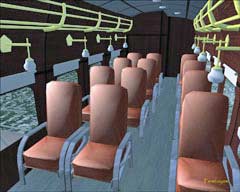
I am now wondering if these guys modeled the "loo" (aka restroom/lavatory/head)! Hmmmm...I'll have to have another flight and take a look in the back of the plane! I'll leave this up to you for your exploratory aspirations! Let's jump up front where all the action is! That is, depending on whom the passengers are! You may be lucky enough to be "transporting" some of the "Rockettes" from Radio City Music Hall! That would be the time to break out that champagne that I mentioned earlier! Whoopee!
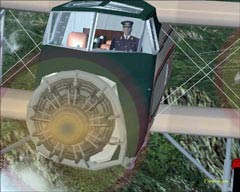


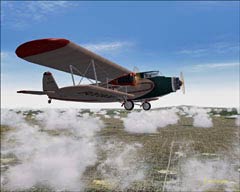
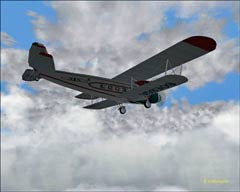
The developers have done an outstanding job with this little package. The exterior detailing is superb, with finely modeled engines, fuselage, landing gear, wires, etc. It all looks great! The paint job is an authentic rendition of the early aircraft that made the aviation history books. An excellent job here as well. Great lighting on the aircraft as well as you pan about watching the sun shine over its surface. Textures are very artistically done, right down to the prop texturing. All control surfaces work and operate in a smooth manner. There are no flaps, spoilers, or lights on this model, which accurately reflect the real aircraft's simplicity in design.
The interior of this model is a real treat for the eyes. Modeled are the "plush" seats and reading lamps, along with very nice texture's making the cabin look very authentic. It almost has that "antique" smell! As I write this, I look at the cabin image at right, and, even though I did not read anything about it in the readme files,
The interior of this model is a real treat for the eyes. Modeled are the "plush" seats and reading lamps, along with very nice texture's making the cabin look very authentic. It almost has that "antique" smell! As I write this, I look at the cabin image at right, and, even though I did not read anything about it in the readme files,

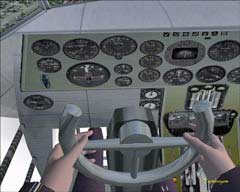
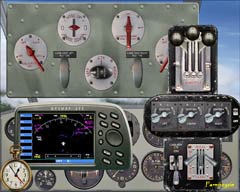

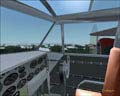



The flight deck of the Model 80 was not made by rocket scientists. The 2D panel has the basic instrumentation to operate the aircraft. All gauges are easily understood and read, and has an authentic look about it. You have some excellent views from the cockpit while in the 2D mode, and if you want a better look, or a breath of fresh air for that matter, just pop open the windows to the side of the pilot and copilot. Very cool! The model was made so that you could fly it from the Virtual Cockpit as well. Your pop-up sub panels will work here as well. As I stated earlier in the description of the Model 80, she has no autopilot, so this means that it's a "hands-on” job for the crew. The longest hop I flew was a bit over two hours on the simulator, with real world weather and the realism settings set to max. I again have revitalized my respect for the pilots of yesteryear! By the time my two hour flight was over, I was a bit tired! It was more of a mental fatigue than physical. The Model 80 is not a difficult aircraft to fly, even with high realism settings. I found that the most difficult task in the Model 80 was taxiing. This may be attributed to the torque from the three engines, so to make life a bit easier, this was a good time to utilize the throttle sub panel, as it has three individual throttle controls. You can goose one a bit more than the other to compensate for the yawing action.
Last, but certainly not least, is the custom "push-back" tractor, fresh in from working Farmboyzim's field! The development team have included a very cool looking tractor (Who else but I, Farmboyzim, would think a tractor looks cool?) for towing the 80 around.
I've got to give these folks very high marks indeed for creating this model as FREEWARE! I think you'll have a blast recreating some of the hops that were on the Model 80's original run. Down below, there's a few more screenshots of some of the locations along the Chicago to San Francisco run. Mind you, actual field locations may differ from the ones depicted here, but the cities and towns are the same. When I say that this beauty is a permanent fixture in my own virtual hanger, you can count on it being true! Most of you know me for my love of the vintage aircraft. OUTSTANDING JOB, and please, can we have more? ;-)
I've got to give these folks very high marks indeed for creating this model as FREEWARE! I think you'll have a blast recreating some of the hops that were on the Model 80's original run. Down below, there's a few more screenshots of some of the locations along the Chicago to San Francisco run. Mind you, actual field locations may differ from the ones depicted here, but the cities and towns are the same. When I say that this beauty is a permanent fixture in my own virtual hanger, you can count on it being true! Most of you know me for my love of the vintage aircraft. OUTSTANDING JOB, and please, can we have more? ;-)
Here are some interesting links for more information concerning the history of the Boeing Corporation...
www.boeing.com/history
www.wingsoverkansas.com
http://en.wikipedia.org
To wrap it up, I want to mention that over at the Virtual Jet Propulsion Laboratory (VJPL), folks that are interested in aircraft and scenery design or those that want to learn how to create textures or repaint, add effects or upgrade a panel, produce a photoreal cockpit for a favorite aircraft, should give their site a look. You'll probably find what you were looking for! Now, how about some more screenshots of this bird!
www.boeing.com/history
www.wingsoverkansas.com
http://en.wikipedia.org
To wrap it up, I want to mention that over at the Virtual Jet Propulsion Laboratory (VJPL), folks that are interested in aircraft and scenery design or those that want to learn how to create textures or repaint, add effects or upgrade a panel, produce a photoreal cockpit for a favorite aircraft, should give their site a look. You'll probably find what you were looking for! Now, how about some more screenshots of this bird!
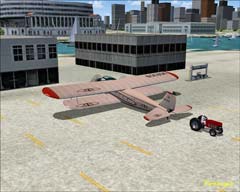
Boeing Field, Seattle WA USA
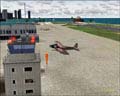
Meigs Field,
Chicago, Ill
Chicago, Ill
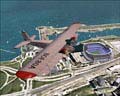
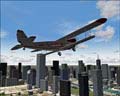
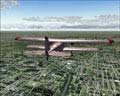
Above Meigs Field, Chicago, Ill
Go West Young Man, Go West!
Out over Utah...
...and then Nevada
The Chicago
Skyline
Skyline


Better land before it gets late!
Beautiful views
all around
all around
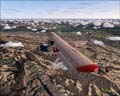

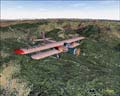
California foothills,
looking north...
looking north...
...and looking south
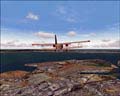

Over Oakland, CA
KOAK
KOAK
...with a glance to the Golen Gate
Final for KSFO,
San Francisco, CA
San Francisco, CA
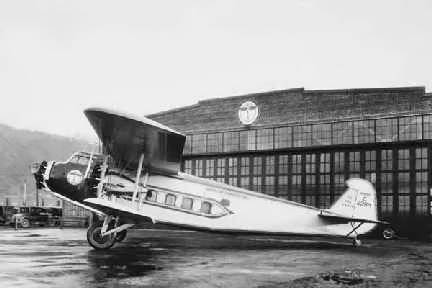
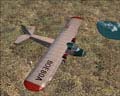
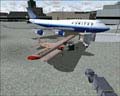
History makers,
side by side.
side by side.

Click images for
larger view.
larger view.